

Universal Design Philosophy: When Accessibility Benefits Everyone
The most effective accessibility isn't special accommodations — it's universal design that makes experiences better for all participants. Research on inclusive design shows that features created for accessibility often improve experiences for non-disabled users too, a phenomenon disability advocates call the "curb-cut effect" (curb cuts designed for wheelchairs also help parents with strollers, travelers with luggage, delivery workers with carts).
Quality accessible venues apply this philosophy:
What Makes Activities Genuinely Accessible (Not Just Compliant)
Physical Access (Foundation)
- Level/ramped entrances (no stairs to entry)
- Wide doorways (minimum 32" clear width, 36"+ preferred)
- Accessible parking with van-accessible spaces
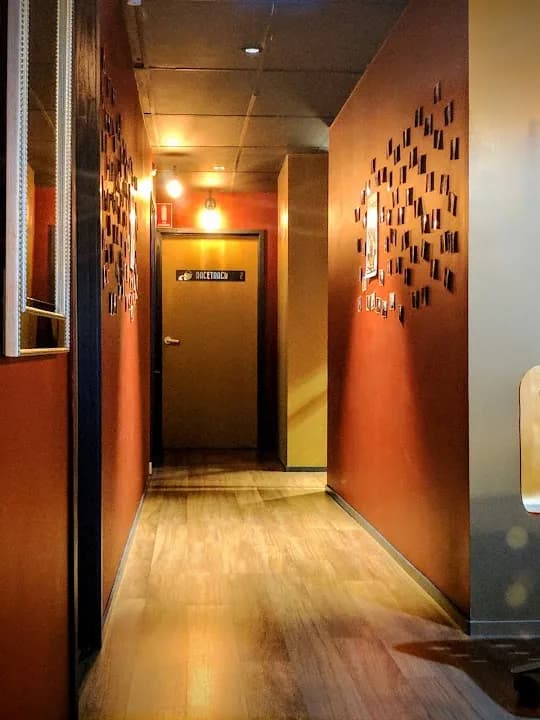
- Smooth flooring (no thick carpet, gravel, or obstacles)
- Accessible restrooms (grab bars, lowered sinks, adequate turning radius)
- Elevator access if multi-story
Activity Participation (Critical)
- Escape Rooms: Puzzles at varied heights (not all require standing/reaching), furniture arrangement allowing wheelchair navigation, tactile and visual puzzles (not requiring mobility), team-based solving where everyone contributes uniquely
- Axe Throwing: Seated throwing positions with proper support, adjustable target heights and distances, coaching adapted to individual biomechanics, emphasis on technique over strength
- Rage Rooms: Equipment positioning at accessible heights, space layout allowing maneuvering, items that break satisfyingly without requiring standing/force, assistance available without feeling patronizing
- Paintball: Accessible field areas with firm surfaces, adapted equipment (lighter markers, accessible triggers), game roles emphasizing strategy over mobility, defensive positions legitimately valuable
Social Inclusion (Often Overlooked)
Dr. Rosemarie Garland-Thomson, disability studies scholar at Emory University, notes: "True accessibility means disabled participants aren't marked as different or requiring special treatment. Design should enable participation so seamlessly that disability becomes irrelevant to the experience."
Good venues achieve this through:
- Staff training emphasizing person-first communication ("How can we best set this up for you?" not "What's wrong?")
- Adaptive options presented matter-of-factly, not as exceptional accommodations requiring gratitude
- Activity framing where different participation styles are legitimate choices, not lesser alternatives
- Mixed-ability groups where wheelchair users' contributions are valued equally (solving escape room puzzles doesn't require walking)
The Business Case for Accessibility
Accessibility isn't just ethical imperative — it's sound business strategy. The disability market represents:
- 26% of US adults (61 million people) have some form of disability
- $490 billion in discretionary income among working-age adults with disabilities
- $8 trillion globally when including family/friends who make accommodation-based decisions
A 2021 study by the American Institutes for Research found that accessible businesses receive 87% more repeat visits from disabled customers and 42% higher overall revenue compared to similar non-accessible competitors, because accessibility attracts not just disabled individuals but their entire social networks.
Venues investing in genuine accessibility benefit from:
- Expanded customer base (disabled individuals + their friends/family making inclusive plans)
- Corporate event preference (companies seeking ADA-compliant team-building must choose accessible venues)
- Positive differentiation (standing out in competitive markets through genuine inclusion)
- Community goodwill (advocacy groups recommend truly accessible venues widely)
Beyond Compliance: What Excellent Accessibility Looks Like
ADA compliance is legal minimum — excellent accessibility exceeds it:
Proactive Communication
Detailed accessibility information on websites (not hidden or requiring phone calls to discover), photos showing accessible features, specific measurements (doorway widths, space dimensions), contact information for discussing individual needs, and staff knowledgeable about accessibility features who can answer specific questions.
Adaptive Equipment Without Stigma
Presenting adaptations as normal options: "We offer both standing and seated axe throwing — which would you prefer?" vs. "Can you throw standing or do you need special accommodation?"
Inclusive Language and Imagery
Marketing materials showing disabled participants as full participants (not token inclusion), language emphasizing what everyone can do rather than limitations, and disability represented casually in promotional content.
Continuous Improvement
Seeking feedback from disabled customers, training staff regularly on accessibility and disability etiquette, updating facilities based on real user experience, and partnering with disability advocacy organizations.
That's why ReleaseRooms highlights genuinely accessible venues — where wheelchair users participate fully in the same amazing experiences as everyone else, because inclusion is designed in from the start, not added reluctantly after complaints.